
Ukraine, Choose Life

To President Volodymyr Zelenskyy and the People of Ukraine, and every person in this world.
I write these words with a prayer for Ukraine.
For every mother waiting for her child to return home. For every family divided by war. For every soldier who wants to live rather than fight. For every Ukrainian child who deserves to grow up hearing music, laughter, and prayer rather than sirens and explosions.
After so much suffering, I pray that this war can end and that Ukraine can enter a time of rebuilding, healing, and peace.
The Torah gives us a command that feels especially urgent now:
“Seek peace and pursue it.”
Psalm 34:15
Peace is not merely something for which we wait. We must pursue it.
But I believe there is another kind of pursuit that must accompany the pursuit of peace.
Teshuvah.
Repentance.
And tikkun, the work of repairing what can still be repaired.
President Zelenskyy, Ukraine has a beautiful and courageous history. It also has painful chapters that should be confronted honestly.
During the Khmelnytsky uprising of 1648 and 1649, Jewish communities suffered devastating violence. Historical records document Cossack attacks in which many Jews were killed.
This history cannot simply be erased.
And so I ask Ukraine to consider an act of national teshuvah.
Where monuments present Bohdan Khmelnytsky or others associated with the massacres of Jews as objects of unqualified national glory, reconsider that veneration.
Take down such a statue, relocate it to a museum, or transform the site so that the victims and the complete history are remembered.
A museum can explain history.
A memorial can teach history.
But public veneration carries a different message.
A nation does not become weaker when it acknowledges the blood in its history. It demonstrates moral courage when it remembers its victims and refuses to glorify their suffering.
This is not about condemning today's Ukrainians for something committed centuries ago.
Children do not inherit the guilt of their ancestors.
But every generation inherits a responsibility to examine what has been handed down to it.
We must ask what wounds remain unacknowledged, what injustices remain unrepaired, and what symbols we continue to honor.
That principle does not belong only to Ukraine.
It is a lesson for the Western world and ultimately for every nation.
We have become very skilled at identifying the failures of others. Nations blame nations. Political movements blame their opponents. Cultures examine the sins of neighboring cultures while overlooking their own.
Teshuvah begins somewhere more difficult:
inside.
Before asking only, “Who did this to us?” we must also have the courage to ask, “What remains within our own house that we are responsible for repairing?”
This does not erase the responsibility of an aggressor or make victims responsible for the violence committed against them.
It means that even while confronting injustice from outside, we should never stop examining what G-d asks us to repair within ourselves.
Sometimes answers begin there.
President Zelenskyy, there is something extraordinary about the fact that a Jewish man now leads Ukraine.
History has placed you at the intersection of these two peoples.
Perhaps that gives you an opportunity few leaders could ever have imagined: to help write a new chapter between the Ukrainian and Jewish peoples.
Acknowledge the victims.
Remember their names and communities.
Tell their story.
Reconsider monuments that venerate those connected to their destruction.
Create an act of remembrance and reconciliation.
Then ask yourself a deeper question:
Would such an act of repentance be pleasing to G-d?
When you stand before G-d and pray for Ukraine, its soldiers, its children, and for this terrible war to end, ask:
Have we done everything within our moral power to repair what is ours to repair?
And here the timing of this message carries special meaning.
We have just passed through the Jewish season of teshuvah, culminating in Yom Kippur.
In the afternoon of Yom Kippur, when the Jewish people stand before G-d seeking forgiveness, we read the Book of Jonah.
That is no small connection.
Nineveh faced judgment. Its people prayed, but Scripture emphasizes something more important than outward displays of repentance:
G-d saw their deeds and that they had turned from their wrongdoing.
The lesson is not simply that Nineveh felt remorse.
They changed what they did.
That is teshuvah.
The Talmud draws precisely this lesson from Nineveh: it was not fasting and sackcloth themselves that mattered, but teshuvah and good deeds.
And that message does not end when Yom Kippur ends.
We are meant to carry it back into the world.
Ukraine should hear it.
The Jewish people should hear it.
The Western world should hear it.
Every nation should hear it.
Before searching endlessly for someone else to blame, look inward.
Find what is yours to repair.
Repair it.
And then turn toward Heaven.
We cannot bargain with G-d.
But neither should we imagine that sincere teshuvah is meaningless before Him.
We repent because repentance is right.
We repair because repair is right.
We remember the murdered because remembering them is right.
We refuse to glorify bloodshed because doing so is right.
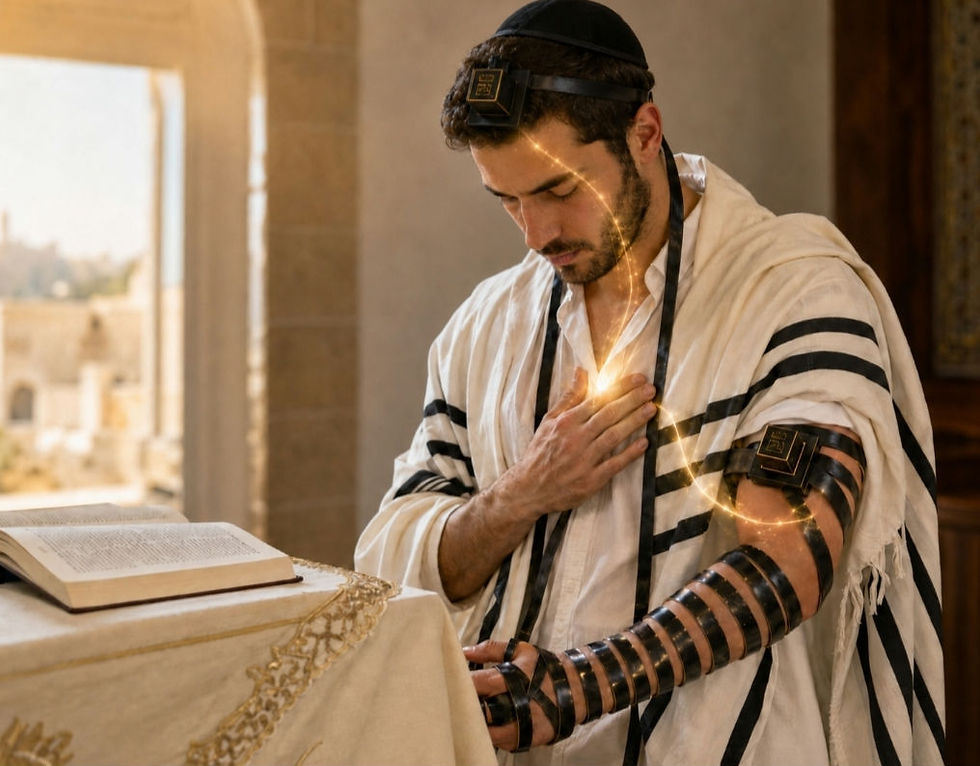
And after doing everything within our hands, we can raise those hands toward Heaven and pray:
Master of the Universe,
We have tried to repair what was ours to repair.
Please hear the cries of the Ukrainian people.
Protect the innocent.
Comfort those who have buried their loved ones.
Bring the soldiers home.
Bring this war to an end.
Give Ukraine peace.
Give its children a future.
And then let Ukraine choose what Moses placed before humanity:
Life.
Choose the children who deserve fathers and mothers.
Choose the soldiers who deserve to come home.
Choose families rebuilding their houses.
Choose truth over convenient memory.
Choose reconciliation over inherited hatred.
Choose peace over another generation of graves.
The prophets describe redemption not merely through great miracles, but through ordinary life becoming possible again.
Zechariah envisions old men and women once again sitting peacefully in the streets while boys and girls play there.
Imagine that Ukraine.
Children playing where soldiers once fought.
Families returning where families once fled.
Homes rising where buildings were destroyed.
Ukrainians and Jews remembering the dead together.
That is a future worth pursuing.
President Zelenskyy, I ask you to help Ukraine take this step.
Not as a bargain with Heaven.
Not because today's Ukrainians bear personal guilt for crimes committed centuries ago.
But because teshuvah requires truth, and tikkun requires action.
Do what is within human hands.
Remember.
Repair.
Pursue peace.
Choose life.
Then pray.
And may G-d hear those prayers.
May He protect the Ukrainian people.
May He comfort every person who has suffered.
May He bring the killing to an end.
May He teach all nations to look not only outward for blame, but inward for the repair that only they can make.
And may every genuine act of teshuvah become another step toward the healing and redemption of our world.
May we live to see Isaiah's vision fulfilled:
“Nation shall not lift up sword against nation, neither shall they learn war anymore.”
Isaiah 2:4
With prayer for Ukraine, for the Jewish people, and for peace,
Benjamin J. Friedman


Comments